Princípio de funcionamento do posicionador de válvulas: Guia técnico completo
Os posicionadores de válvulas são dispositivos essenciais nos sistemas de controlo industrial, assegurando o funcionamento preciso da válvula ajustando a pressão do atuador com base nos sinais de controlo.Se você está lidando com o controle de processos em refinarias de petróleo, instalações químicas, ou geração de energia, compreendendo oPrincípio de funcionamento do posicionador de válvulaEste guia responde a perguntas comuns sobre o desempenho e a redução do tempo de inatividade.Máquinas de secagem, a sua mecânica, os seus tipos e os seus benefícios, com explicações simples e detalhadas.

Posicionadores de válvulas. Princípios básicos de válvulas de controlo e...
O que é um posicionador de válvulas?
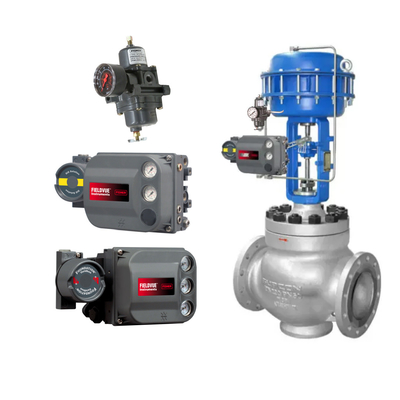
Aposicionador de válvulasé um dispositivo de controlo de retroalimentação montado no actuador de uma válvula de controlo.4-20 mA ou 3-15 psi) e ajusta a pressão do ar para o atuador em conformidadeSem um posicionador, fatores como atrito, variações de pressão ou histerese do atuador podem causar posicionamento impreciso, levando a ineficiências de processo ou problemas de segurança.
Porque precisamos de posicionadores de válvulas?Em configurações básicas, os sinais de controle dirigem diretamente os atuadores, mas as condições do mundo real (por exemplo, alta pressão diferencial) causam desvios.A posição da haste é a variável de processo (PV), o sinal de comando é o ponto de fixação (SP) e a saída para o atuador é a variável manipulada (MV).
Principio de funcionamento do posicionador de válvula explicado
O centroPrincípio de funcionamento do posicionador de válvulaO sistema depende do equilíbrio de força ou feedback de movimento para conseguir um controlo preciso.
- Recepção de sinalO posicionador recebe um sinal de entrada do controlador (pneumático: 3-15 psi; elétrico: 4-20 mA).
- Comparação: Utilizando um comparador (feixe mecânico ou circuito eletrónico), mede a diferença entre o sinal de entrada e o feedback proveniente da haste da válvula (via cam, alavanca ou sensor).
- AjusteSe não estiverem combinados, o posicionador modula o fluxo de ar:
- Aumentar/diminuir a pressão no diafragma ou no pistão do atuador.
- Para os tipos pneumáticos, um conjunto de bocal de flapper restringe o ar, criando contrapressão para abrir/fechar as válvulas de alimentação.
- Em eletro-pneumática, um transdutor I/P converte corrente em pressão.
- Loop de feedback: O movimento da haste atualiza a mola de feedback ou o sensor, reequilibrando-se até que a posição corresponda ao sinal.
Como funciona um posicionador pneumático de válvulas?A entrada expande um fuzil, movendo um feixe para cobrir um bocal, aumentando a contrapressão que desloca um diafragma de relé para fornecer ar ao atuador.A resposta do caule ajusta uma mola para restaurar o equilíbrio.
Como funciona um posicionador de válvula eletro-pneumático?Converte 4-20 mA em saída pneumática através de um transdutor I/P (por exemplo, flapper de bocal ou piezo).
Como funciona um posicionador digital de válvulas?O microprocessador processa sinais (HART/Fieldbus), com algoritmos avançados para calibração automática e manutenção preditiva.
Tipos de posicionadores de válvulas e seus princípios
- Pneumático: Equilíbrio de forças através de foles e molas.
- Eletro-pneumático (E/P): Adiciona entrada elétrica para melhor controlo; utiliza transdutores para conversão.
- Digital/inteligente: Baseado em processador com diagnóstico; suporta protocolos como o HART 7 para monitoramento remoto.
Dica de seleção: Pneumático para a segurança intrínseca; digital para a integração da Indústria 4.0.
Vantagens do uso de posicionadores de válvulas
- Precisão: Reduz a histerese/banda morta para < 0,5%.
- Estabilidade- Controla o atrito e as alterações de pressão.
- DiagnósticoModelos inteligentes prevêem falhas através de assinaturas de válvulas.
- EficiênciaOpções de baixo sangramento economizam energia.
Problemas comuns e soluções
Porque é que o meu posicionador de válvulas não responde?Solução: calibre zero/span.
O que causa a caça/oscilação?Solução: usar sintonização automática em modelos digitais.
Como calibrar um posicionador de válvulas?Entrada 4 mA (zero), ajustado até fechado; 20 mA (span) para total aberto.
Xiangjing: Seu fornecedor confiável de posicionadores de válvulas na China
Como um dos maiores fornecedores de posicionadores de válvulas da China, a Xiangjing oferece uma vasta seleção de marcas e modelos com um amplo inventário para entrega rápida.prazos de entrega fiáveis, e apoio técnico especializado para resolver os seus desafios de controlo.www.shgongboshi.compara consultas e citações sobreMáquinas de secagem.
Palavras-chave: posicionador de válvulas, princípio de funcionamento do posicionador de válvulas, princípio de funcionamento do posicionador de válvulas pneumáticas, princípio de funcionamento do posicionador de válvulas eletro-pneumáticas,Princípio de funcionamento do posicionador de válvula digital, como funciona um posicionador de válvula, calibração do posicionador de válvula, tipos de posicionadores de válvula.


 Por favor verifique seu email!